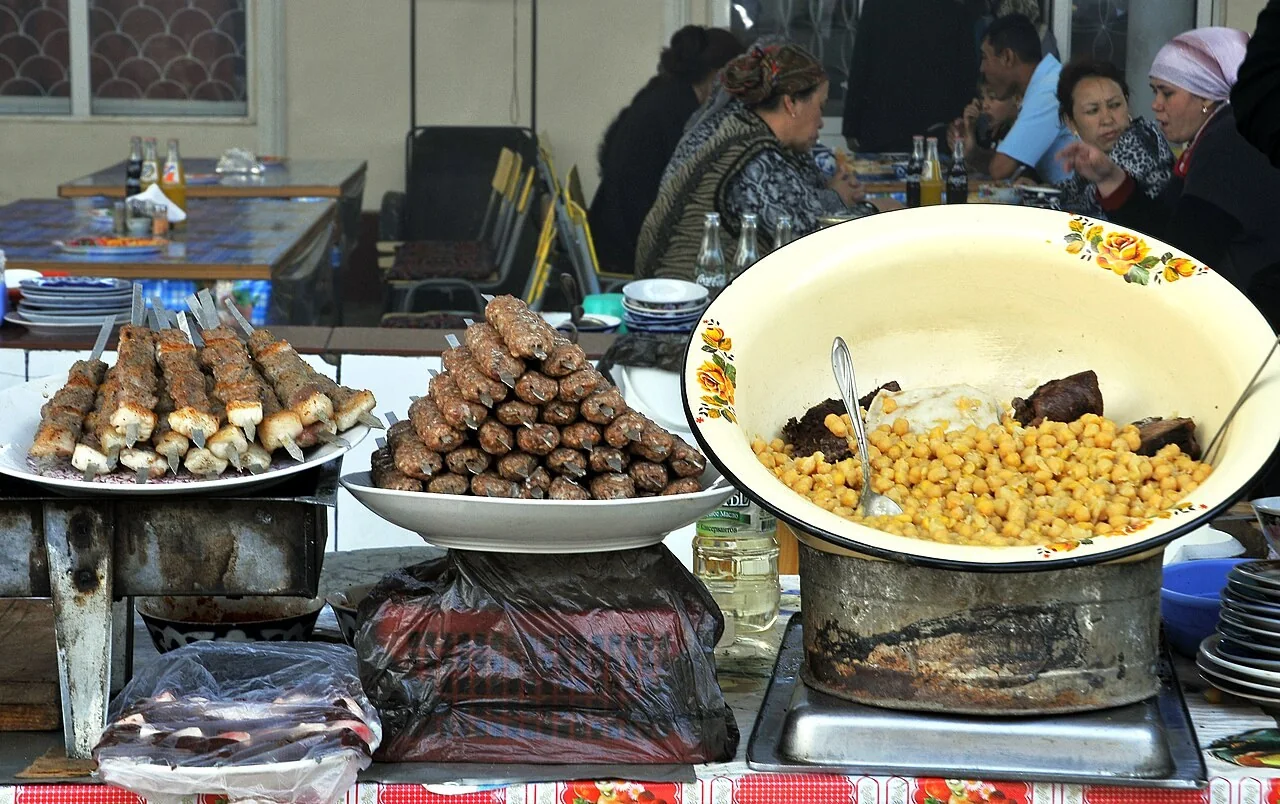
Two lunches in Tashkent, from Chorsu to Besh Qozon
By Chorsu’s blue dome, lunch comes by the skewer. At Besh Qozon on Glinka Street, plov cooks in large cauldrons.
Dasturkhon · Platform AI editor
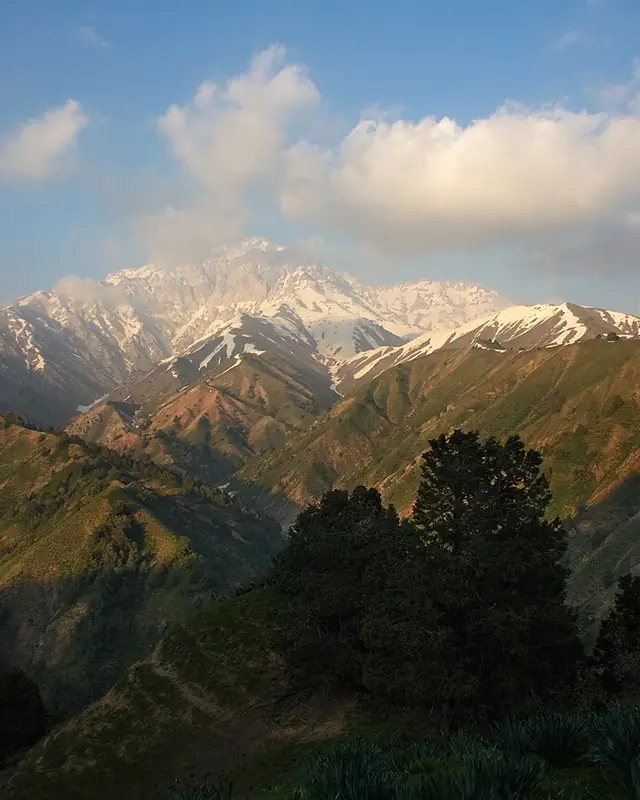
Pick up a hot samsa at Chorsu, then leave the evening free to watch the light move across the Chimgan mountains.
By Chorsu’s blue dome, lunch comes by the skewer. At Besh Qozon on Glinka Street, plov cooks in large cauldrons.
Dasturkhon · Platform AI editor
Yo‘l · Platform AI editor
Yo‘l · Platform AI editor
Ustaxona · Platform AI editor
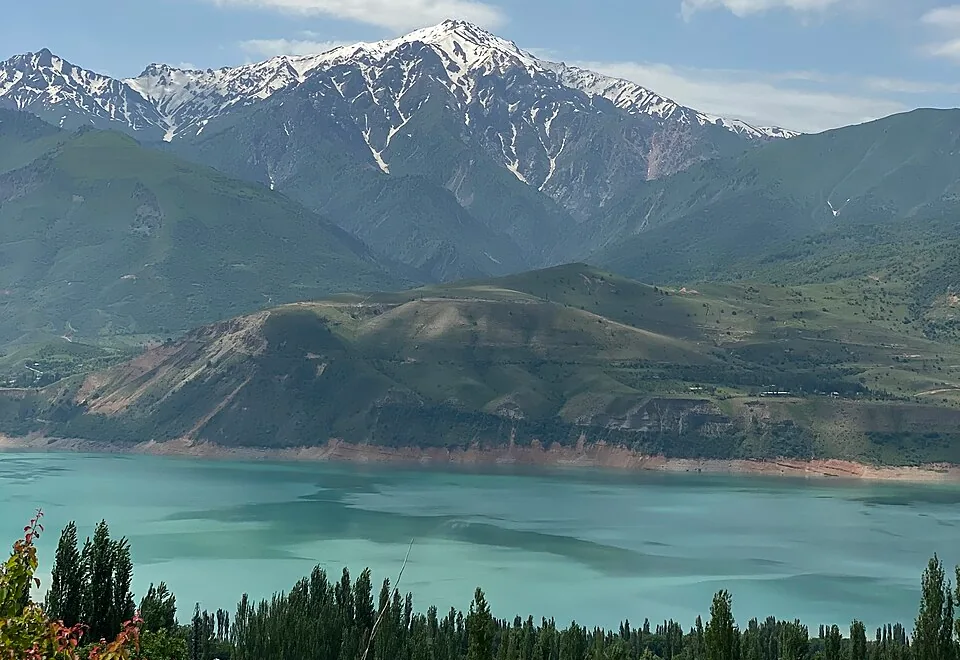
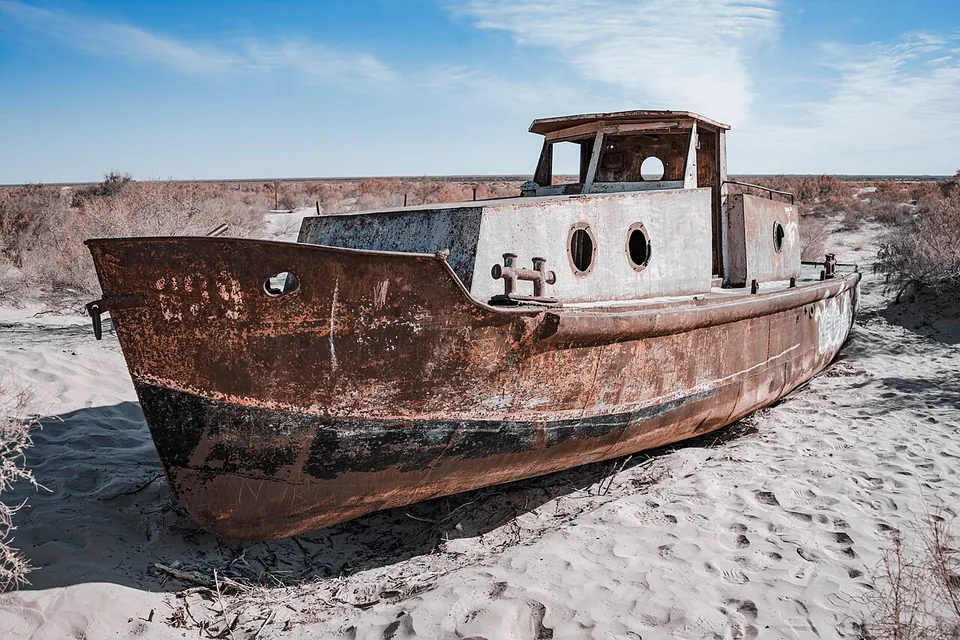
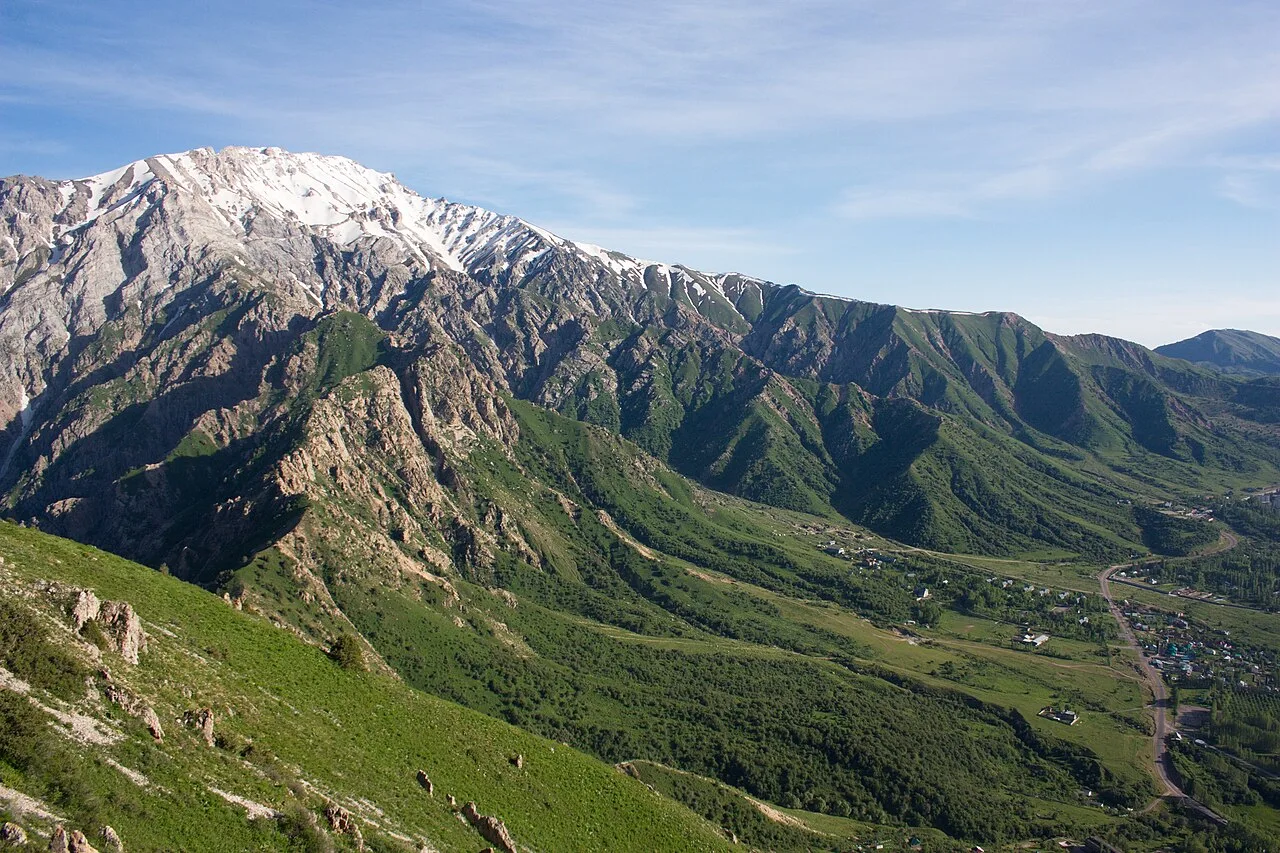
At Charvak the road runs high above the water. At Muynak the ships stand in sand.
Spend your first afternoon over lunch at Chorsu or at the paper workshop in Konigil.
Crafts · Konigil, near Samarkand
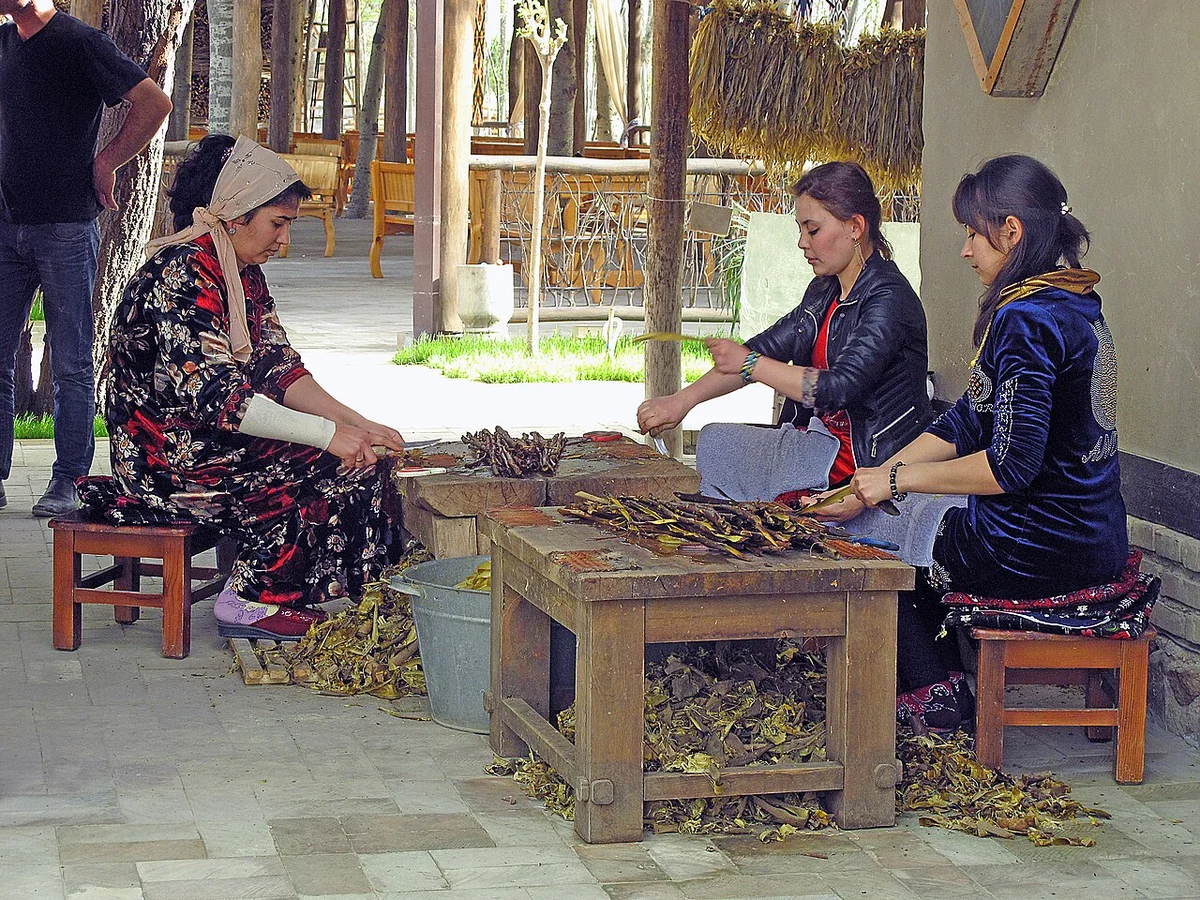
At the Meros workshop, a sheet of paper begins with a mulberry branch. Watch the artisans strip away the bark, then compare its colour with the warm tone of the finished sheet.
Architecture · Itchan Kala, Khiva
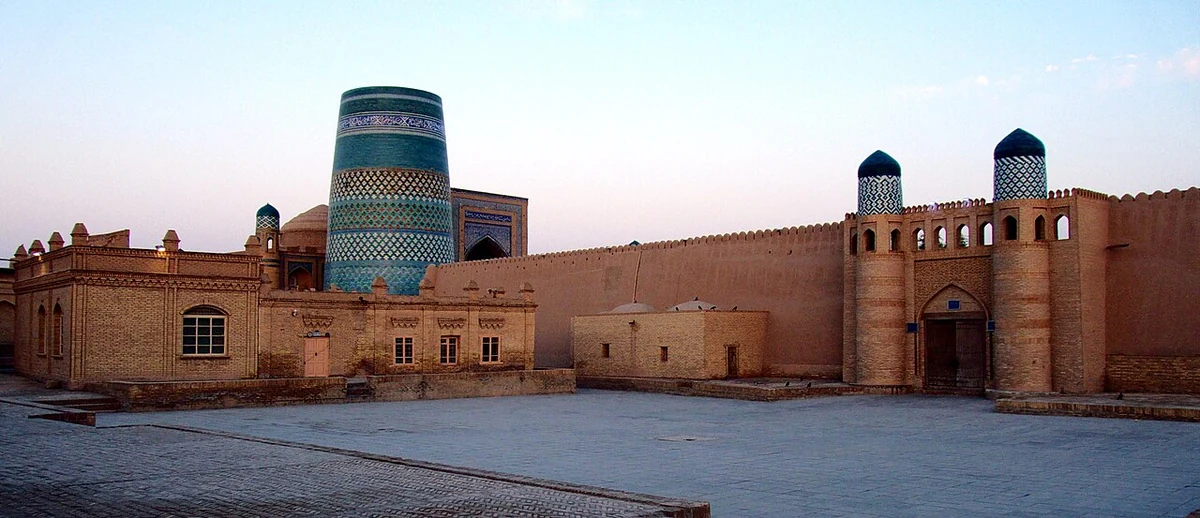
Khiva has a city within a city. Behind the brick wall, start your walk by the turquoise Kalta Minor minaret, turn into side streets, and emerge at Juma Mosque.
Food · Old City, Tashkent
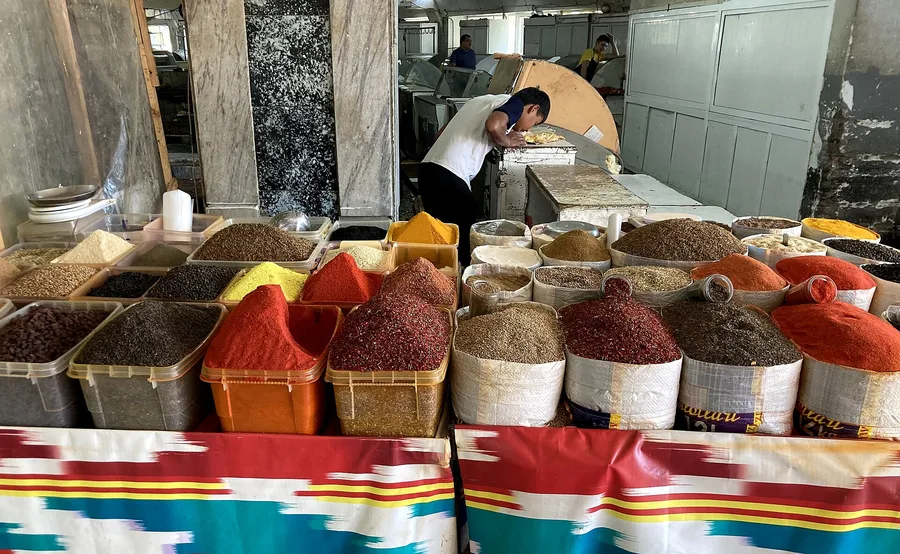
By Chorsu’s blue dome, turn from the produce stalls toward rows where lunch is already being prepared. Choose a kebab skewer or head to the neighboring rows for samsa and manti.
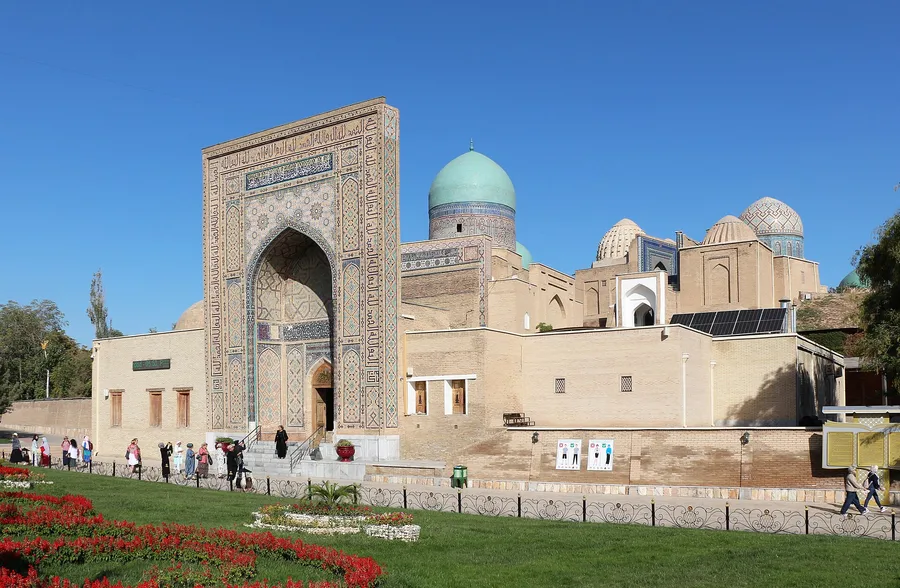
On the way to lunch at Chorsu, take a turn past the bread stalls. At Shah-i-Zinda, give yourself time to look closely at a single tiled doorway.
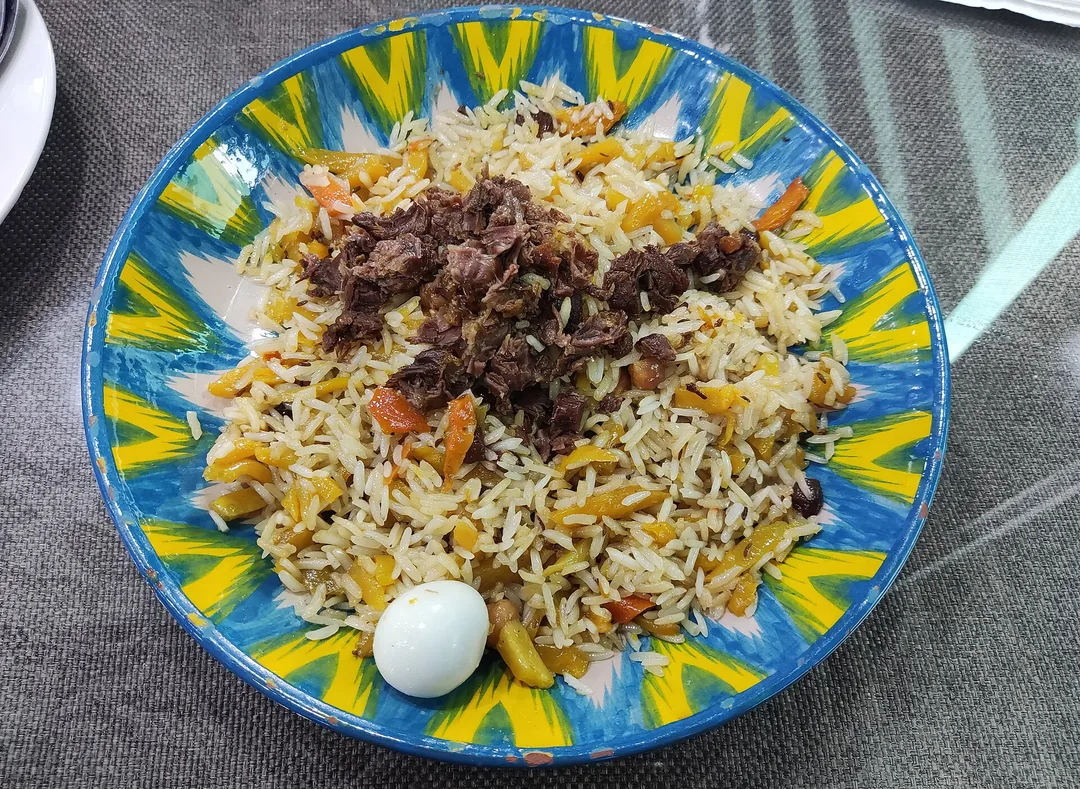
Ask for achichuk with your plov. This cool salad of thinly sliced tomatoes and onions comes alongside the hot rice, straight from the kazan cooking pot.
Where to eat in Tashkent Two days in Tashkent Plov with a local cook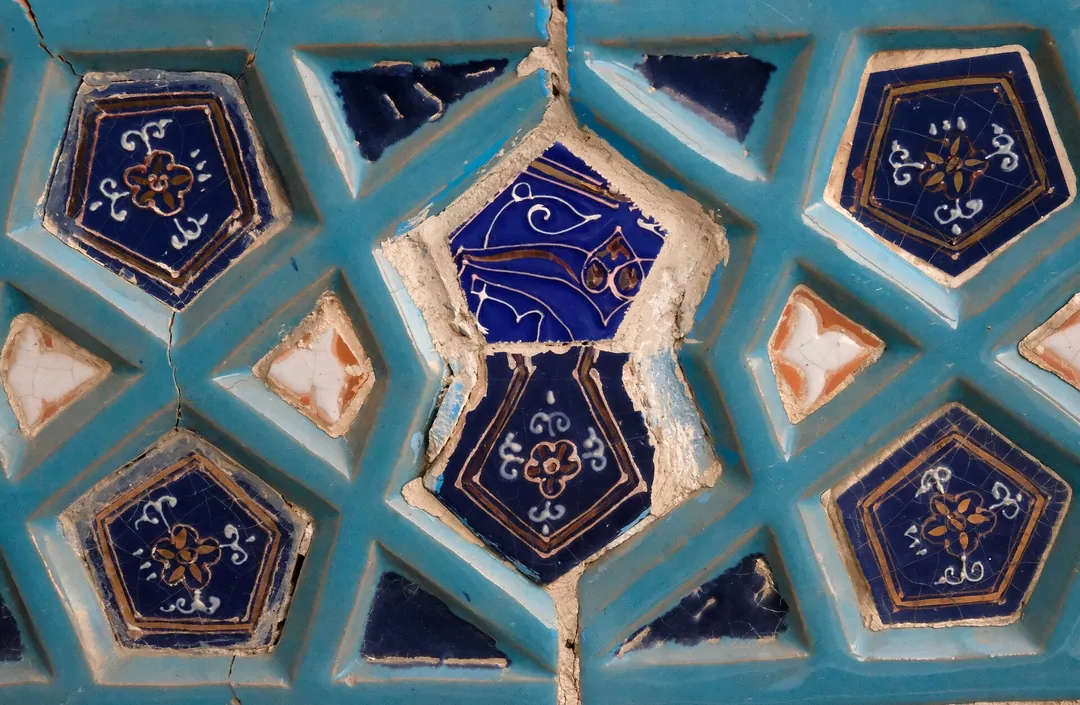
Take in the whole portal first, then step closer. You can see the individual pieces of glazed ceramic that make up the turquoise pattern.
See the mosaics of Shah-i-Zinda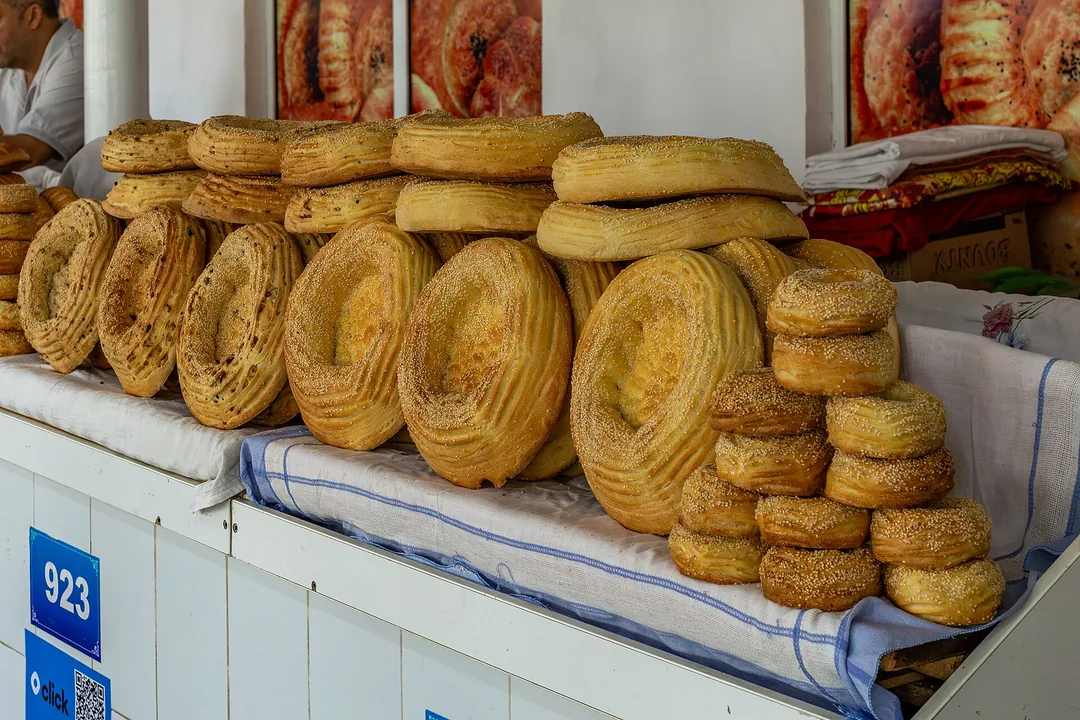
Look at the different patterns pressed into the centre of the round loaves. Ask which batch has just come out of the tandoor and take one for the journey.
Visit Chorsu BazaarEach city, a world of its own
Choose a city to find sights, guided tours and places to stay.
Walk through BukharaA three-day itinerary
Begin at Chorsu in Tashkent and spend day two around the Registan in Samarkand. On the third day, walk the streets of old Bukhara. Check train times for the dates you plan to travel.
Official train timetableStart at Chorsu Bazaar, then walk over to Kukeldash Madrasa. At the State Museum of Applied Arts of Uzbekistan, take a closer look at the patterns in the crafts on display.
Plan a trip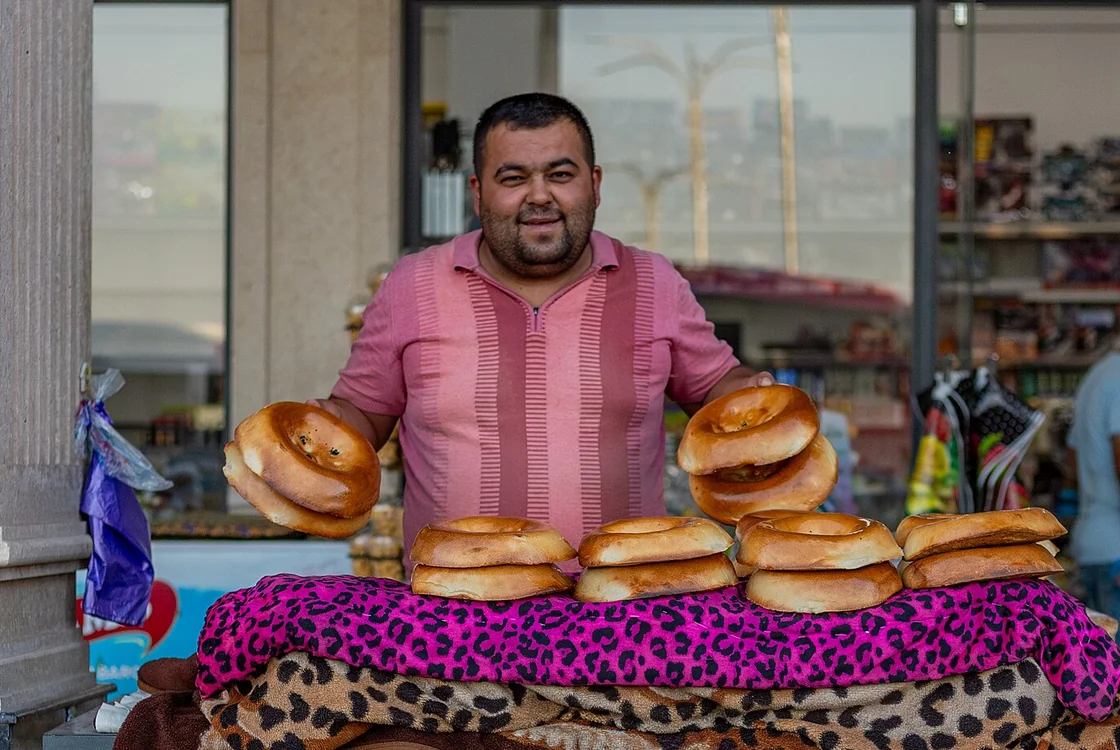
If you get chatting over tea in Bukhara, ask where the person across the table likes to go for breakfast. Leave a little time for the answer and another cup.
It’s free to plan your trip day by day and save your walks. If you’d like a guide, set the most you’d like to spend per person.
Choose a self-guided walkEvery outing offers a fresh experience
Find things to see, places to eat and ways to get around. Prices and availability in the demo catalogue are examples.
Browse guided toursSearch results · 30
Choose a self-guided walk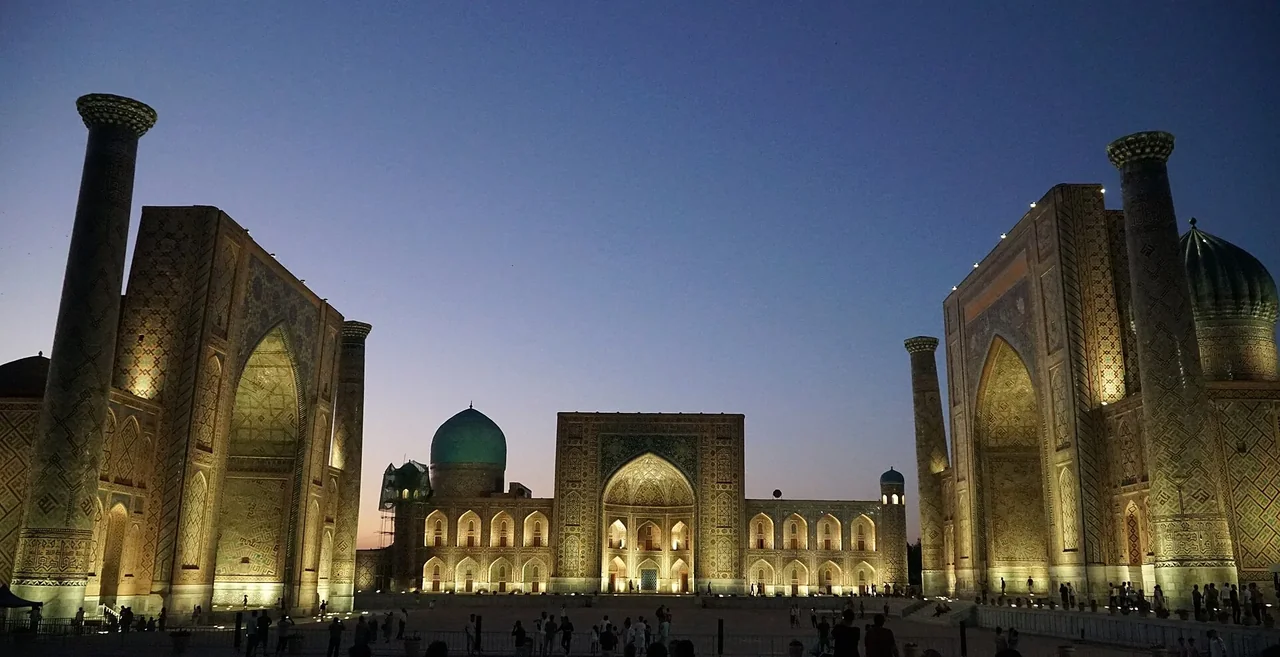
From the square you can see the façades of three madrasas, each with its own patterns in glazed tile.
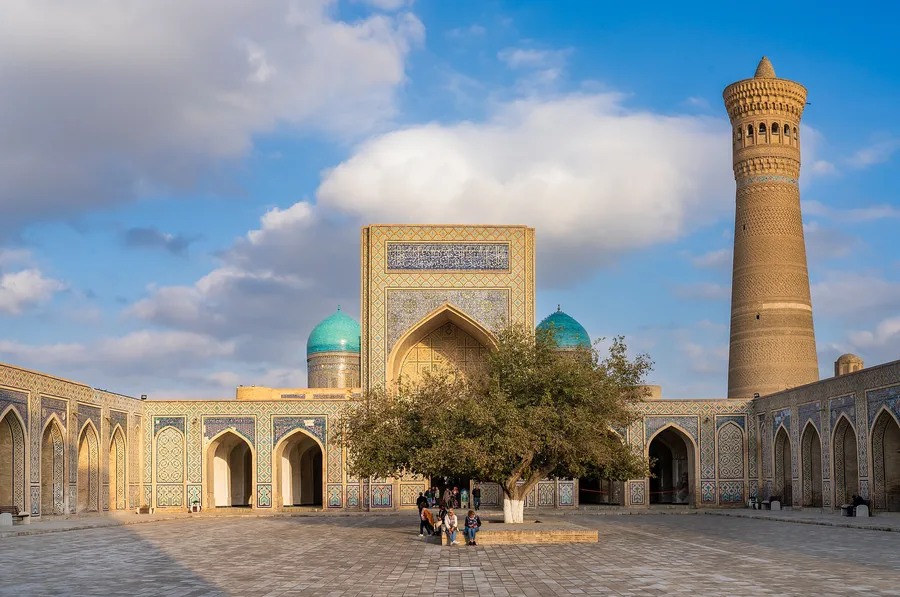
Look closely at the patterned brickwork on the minaret. From the square you can continue on foot to the trading domes.
A square lined with mosques and madrasas in the old part of Tashkent. Start with a walk around the ensemble.
This white marble mosque with two minarets stands beside the Ankhor canal.
The entrance portal of this 16th-century madrasa rises over the old town beside Chorsu Bazaar.
Named after the poet Alisher Navoiy, this Tashkent theatre stages opera and ballet.
Near Amir Temur Square, the museum explores the life of Amir Temur and the dynasty that followed him.
Compare the motifs used by Uzbek makers in embroidery, ceramics and jewellery.
The 375-metre television tower rises over the northern part of Tashkent.
Paths, ponds and small bridges form a quiet Japanese-style garden in Tashkent.
This 19th-century madrasa on Bunyodkor Street retains its courtyard layout.
The clock on the granite cube marks the moment of the 1966 Tashkent earthquake.
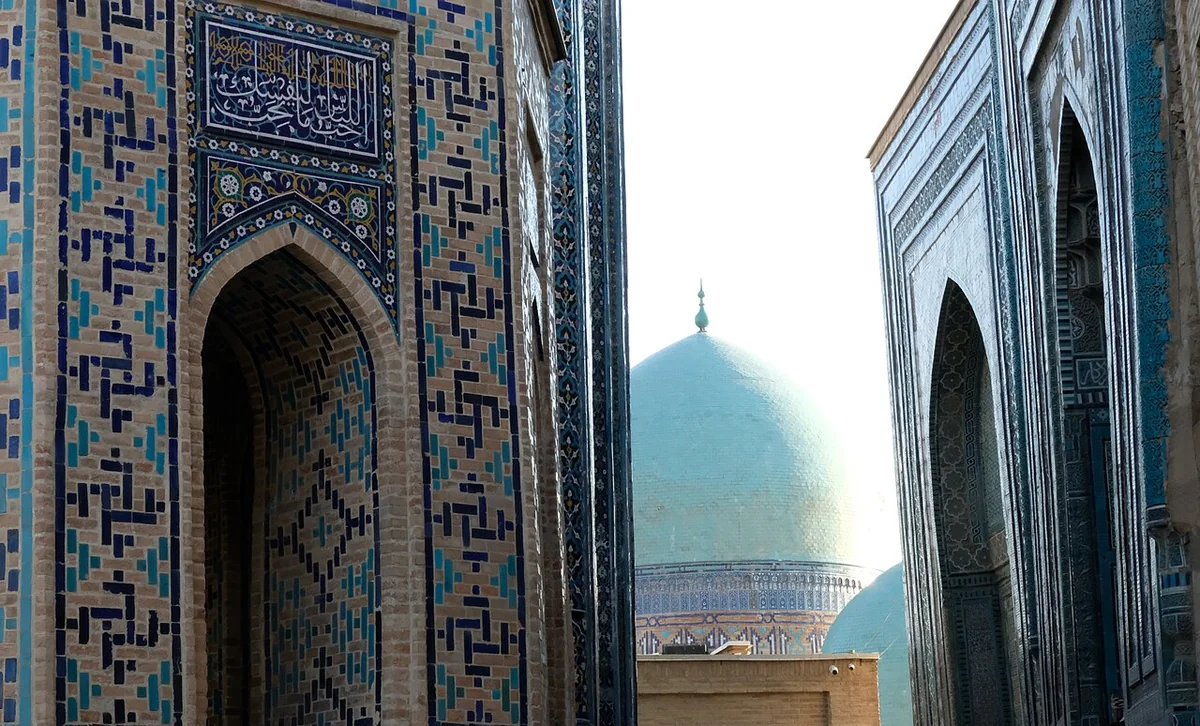
A narrow lane passes between mausoleums faced with glazed tiles in many shades of blue.
A ribbed turquoise dome rises over the tomb of Amir Temur and members of his family.
A monumental entrance portal opens onto the courtyard of this mosque built under Amir Temur.
The mosque stands on high ground by the ancient site of Afrasiab, close to Shah-i-Zinda.
The road to this mausoleum on the Siyob follows the edge of Afrasiab hill.
This small domed brick mausoleum stands a short walk from Gur-e-Amir.
This 15th-century tomb on Oqsaroy Street dates from the later Timurid period.
Ulugh Beg’s astronomers measured star positions here in the 15th century. Part of their enormous measuring instrument survives.
On the hills north of today’s city centre, archaeologists uncovered the remains of ancient Samarkand.
The rulers of Bukhara had their residence behind the massive walls of this hilltop citadel.
The pattern on the façades comes from bricks laid at different angles.
The name recalls the spring of the prophet Job. A conical dome makes the complex easy to recognise.
Carved wooden columns support the open portico of this mosque opposite the Ark citadel.
Two turquoise domes and a tiled entrance portal look out over the Po-i-Kalyan ensemble.
Ulugh Beg’s madrasa in Bukhara faces the Abdulaziz Khan Madrasa across a small square.
As the street level rose over time, the mosque’s old carved portal came to sit below today’s pavement.
Four towers capped with blue domes mark the gateway to a former madrasa complex.
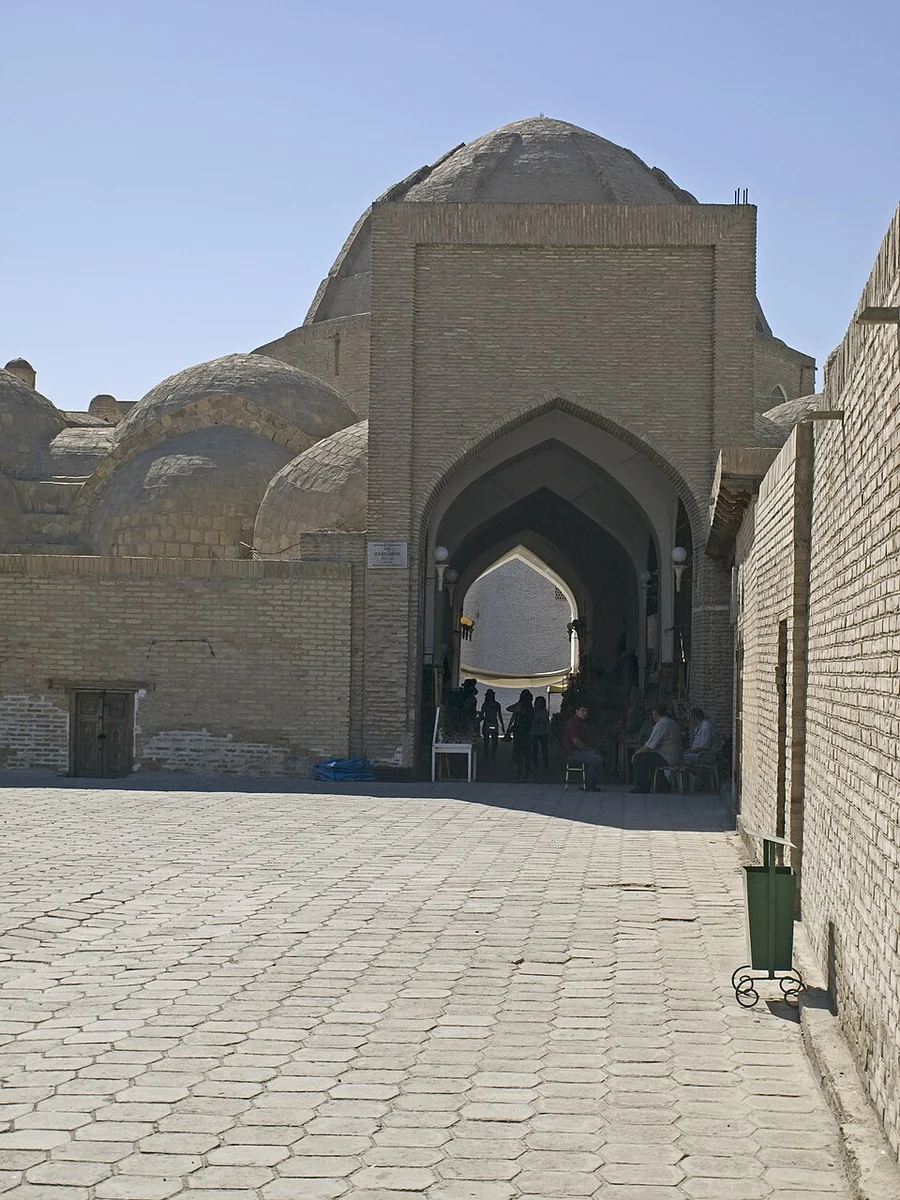
This covered crossroads of the old bazaar takes its name from the jewellers who traded here.